
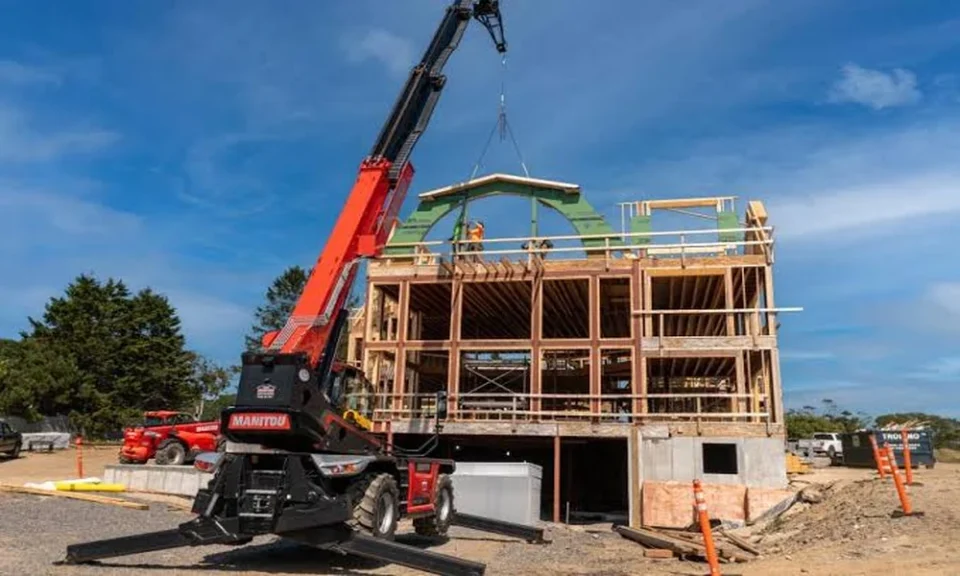
Rotating telehandlers are a common and popular sight on many sites across the country. The safe and precise ability to lift and place heavy loads makes a massive difference to the success and safety of myriad projects. If you are in the market for telehandler hire, how do you make sure that you have made the correct choice of rotating telehandler?
What makes a rotating telehandler a good choice?
Rotating telehandlers have transformed the way many industries function. A rotating telehandler provides you with the ability to precisely lift, move, and place heavy and cumbersome loads without the need to reposition the base between lifts. As a cost-saving piece of machinery that boosts efficiency, accuracy, and productivity on site, there is nothing like it. It combines the functions of a traditional telehandler with a crane and an elevated work platform, offering 360-degree rotations for flexible working conditions. When you consider the possibilities of telehandler attachments as well, the rotating telehandler becomes a multi-purpose tool on site that is unmatched.
How to choose the correct telehandler
There are a few factors that you should consider when choosing a rotating telehandler for your site and project.
Reach, height, and capacity
Every rotating telehandler will have a load chart that shows the safe parameters from which you can work in terms of load capacity. This explains the relationship between the load capacity, the working radius, and the boom angle. When a rotating telehandler is at full reach, with the boom extended horizontally, the maximum capacity drops, whereas there is a higher load capacity when the boom is at its minimum radius. Consider what your site conditions are like and the capacities you are working with.
Height and radius
When you raise the boom on a rotating telehandler the potential reach forward is lowered. The load chart map will tell you the precise nature of this for each model. On sites where you are working on multi-level buildings, you’ll need to know what is possible in terms of height and radius to choose the correct telehandler for the tasks at hand.
Footprint and surface conditions
For telehandlers with large reach capabilities, outriggers are deployed. This must be taken into consideration, as it isn’t just the footprint of the telehandler itself that must be thought of, but the outrigger too. The surface must also be verified to ensure that it is safe to handle the weight.
What about telehandler attachments?
The right attachment transforms a telehandler into a multi-purpose behemoth. From baskets and aerial platforms to lifting hooks and industrial buckets, there are many choices to be made depending on your site and project.
Safety concerns
A site visit and clear plan help you to work safely on site with a rotating telehandler. This means understanding the load charts that we mentioned above, establishing overhead exclusion zones when lifting materials into the air, and assessing the ground for safe use. You must also consider wind speeds and safe working parameters that take the weather into account.
Material handling specialists with a fleet of rotating telehandlers understand what it takes to deliver exceptional telehandler hire services. Building a long-term relationship with a supplier ensures that you always have access to the latest, safest, and most efficient rotating telehandlers.
