
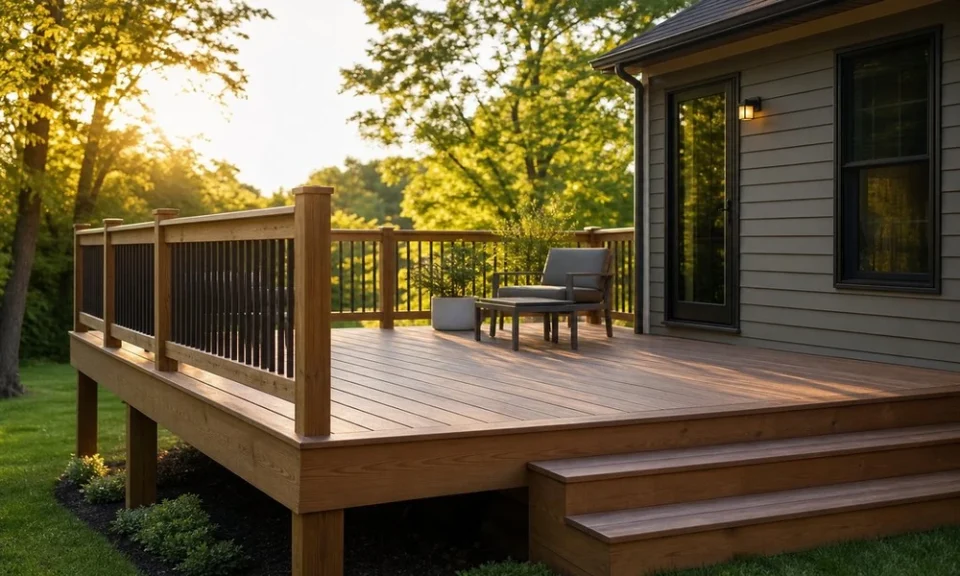
Residential outdoor deck
While the decking boards get all the glory, there are a lot of other factors to consider when planning and building a deck. Here are a few things to keep in mind before starting on the project.
Start With How the Space Will Be Used
The deck is more than just a platform that provides access to the yard, and it is a place for outdoor dining, quiet morning coffee, storage space underneath, a transition between indoors and out. Determine the size it needs to be for these activities by taking into account who’s going to be using it, not just how much of the yard it will take up.
Draw a deck layout for your home’s configuration, accounting for:
- How many people will use the space at any given time
- Door and window locations
- Utility locations and access
- Stairs and the area around them
- Walkways
- Sun exposure and weather protection
- Seating areas
Picture the Furniture in Place
Keep in mind that while you’re working from measurements on paper, you’re really planning a space for your family and their friends and guests to use. Consider how furniture and grills will fit into the spaces and leave room for movement. It’s easy to assume a big deck will always feel open, but once you add railings, furniture, and the swings of exterior doors, it can start to feel cramped. For one industry reference, the team at Gaven Constructions covers deck construction Miami in practical terms.
Get the Structure Right First
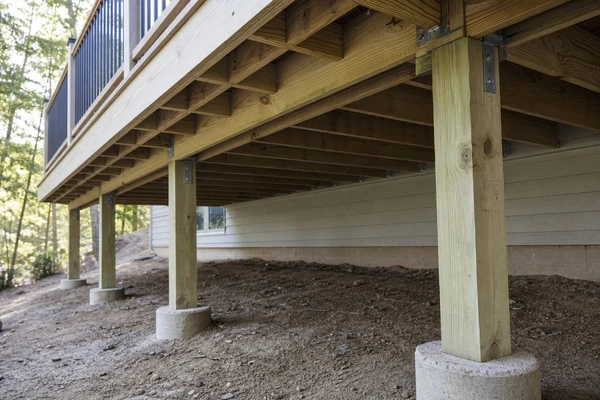
Deck framing and materials
While you want to plan and purchase decking boards with the deck’s end use in mind, the longevity of the deck itself will depend mostly on its framing. Posts, beams, and joists, plus the connections between them and the house, need to be planned out to account for the loads it’s going to receive and the soil conditions, which Britannica covers at britannica.com/science, below it.
Also, before you build a deck that has stairs, check that there’s enough space to provide a level landing outside any door that will open directly to the deck. Building codes have specific requirements for door landings, especially around the deck’s height that could interfere with a door’s swing. It’s much easier to solve landing and step height problems before you’ve built a deck than after the decking boards are on.
Watch the Details That Cause Trouble Later
- Water damage: Even if the decking is well-built, decks can be plagued by damage from poor drainage, from where water gathers at footings or where the deck meets the wall. If it’s attached to a house, make sure to flash the connection properly to shed water in the opposite direction from the house.
- Access under an elevated deck: If the deck will have a crawlable space underneath, plan ahead for how to access this space for storage, maintenance, or drainage upkeep, especially if you plan to enclose it with decking boards. Skirting an elevated deck can make the space look nicer but can also prevent necessary airflow and can interfere with maintenance and drainage.
- Material selection: Natural wood is a classic choice but will require regular refinishing, and it is important to plan a deck’s dimensions and construction with maintenance in mind. Manufactured decking products, such as these, might make it a little easier on yourself, resisting moisture and other issues and requiring little or no upkeep, but keep in mind that these materials will expand and contract based on temperature.
- Railings: Beyond the material and color choices that affect the deck’s look, consider the rail height, post placement, infill styles, and attachment methods, all of which factor into the structure’s safety and beauty.
- Fasteners: Exterior-grade deck screws and clips or other hidden fasteners will keep the deck from staining and disintegrating early. Be especially mindful of the metals and how they interact with one another and with treated wood, as the wrong combination of materials can cause fasteners to fail faster and cause the deck structure to begin to deteriorate early on.
Miami deck builders and design teams should consider where and how furniture, planters and other movable items will be stored during severe weather.
Attachments, railing posts, footings, and ledger hardware should be engineered to handle uplift in addition to regular loads and should not create connections which are inaccessible during inspection or repair.
Decks in coastal areas of Miami are susceptible to hardware corrosion from the salt in the air even if they are not located on the beach.
Specify connectors, screws and other hardware in compatible stainless steel or with appropriate protective coatings.
Periodically inspect railings, ledgers and post bases to look for corrosion, as they collect moisture.
Check Everything Before Construction Begins
Make sure all dimensions, elevations, stair locations, railing heights, materials, code considerations and permits, and material lists are accounted for before heading out to the hardware store or lumberyard. Measure, stake, and string the deck’s perimeter and check that the landing is level in front of any exterior doors and that water will drain properly away from the structure. A little effort now will save a lot of heartache later! Remember:
Water wins.
