
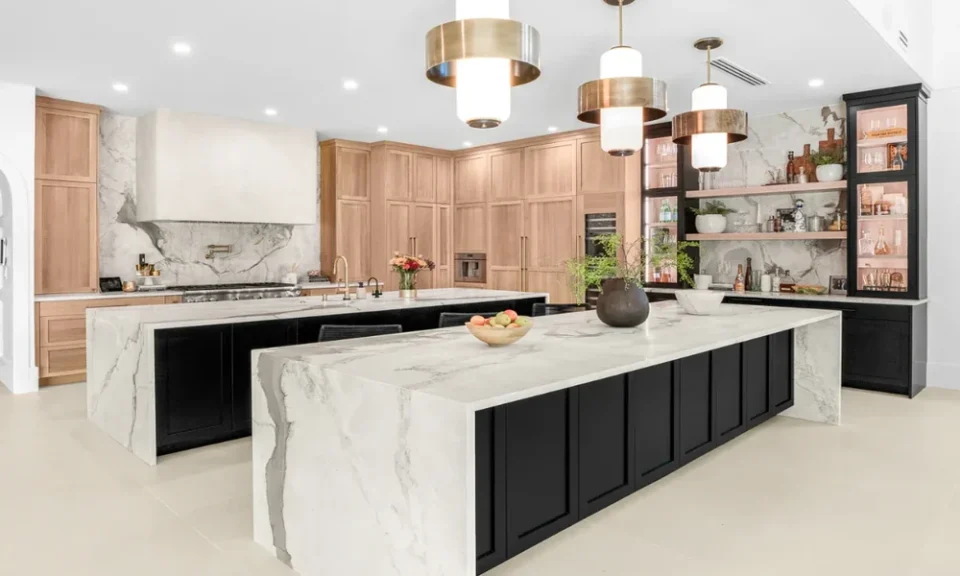
A clean kitchen is not always about having fewer things. Sometimes, the real problem is that your cabinets are not designed for the way you use them.
You might have plenty of storage space, but finding a saucepan still means moving three other pots. Your pantry may be full, yet you keep buying ingredients you already have because they are hidden behind other items.
And somehow, small appliances always end up taking over the countertops.
The good news is that you do not necessarily need a bigger kitchen to solve these problems.
The right kitchen cabinet storage ideas can help you organize everyday items, make better use of available space, and keep frequently used tools within reach.
From pull-out pantry shelves to hidden appliance storage, these practical solutions can make your kitchen easier to use without turning every cabinet into an expensive remodeling project.
Why Does Kitchen Cabinet Storage Become Cluttered?
Kitchen clutter often develops because cabinets are designed around available space rather than daily routines.
A deep base cabinet may hold plenty of cookware, but items stored in the back can become difficult to reach.
Wide drawers without dividers may turn into mixed collections of utensils, lids, and small kitchen tools.
Pantry cabinets present similar problems.
When shelves are too deep or items are stacked without a clear system, ingredients become difficult to find.
Over time, homeowners may begin leaving frequently used items on the countertop simply because putting them away is inconvenient.
The goal of better cabinet storage is to make important items visible, accessible, and easy to return to their proper places.
1. Organize Pantry Shelves by Food Category
One of the simplest ways to improve kitchen storage is to organize pantry items into clear categories.
Instead of placing groceries wherever there is room, create separate zones for the foods your household uses most often.
For example:
- Breakfast: Cereal, oatmeal, coffee, and tea
- Snacks: Crackers, granola bars, and packaged foods
- Baking: Flour, sugar, baking powder, and decorations
- Dinner ingredients: Rice, pasta, canned goods, and sauces
- Extra supplies: Unopened packages and backup ingredients
Place frequently used items at comfortable reaching height.
Less-used items can go on higher or lower shelves, provided they remain safe and accessible.
This simple approach makes it easier to see what you already have before buying more groceries.
2. Install Pull-Out Pantry Shelves
Deep pantry cabinets can hide items behind several rows of containers.
Pull-out pantry shelves help solve this problem by allowing the storage surface to slide forward.
Instead of reaching into the back of a cabinet, you can see more of its contents at once.
These shelves work particularly well for jars, canned foods, small packages, and cooking ingredients.
Some systems use individual sliding trays, while others use taller pull-out storage units.
Before installation, measure the cabinet’s interior width, depth, and usable opening.
Also check the hardware’s weight rating.
A pantry filled with heavy glass jars requires stronger hardware than one used for lightweight snacks.
3. Use Clear Pantry Bins and Matching Containers
Storage containers can help keep pantry shelves organized.
However, buying matching containers without measuring your shelves can create another problem.
Some bins waste space because they are too wide or too deep.
Start by measuring the available shelf dimensions.
Then choose containers that fit comfortably while leaving enough room to remove them.
Clear bins are useful because you can see their contents without opening every container.
They work well for snacks, baking ingredients, and small food packages.
Labels can also help household members return items to the correct location.
For food storage, choose appropriate food-safe containers and keep important expiration or preparation information available.
4. Add Roll-Out Shelves to Deep Base Cabinets
Base cabinets often become frustrating because their contents are difficult to reach.
This is especially common with pots, pans, mixing bowls, and small appliances.
Roll-out cabinet shelves make these items easier to access.
Instead of bending down and reaching behind other cookware, you pull the shelf forward.
This can reduce unnecessary stacking and make better use of deep cabinet spaces.
Roll-out shelves are particularly useful in kitchens that already have traditional cabinet doors.
They can sometimes be added without replacing the entire cabinet.
Before installing them, check whether the door hinges, face frame, or center supports will interfere with the sliding mechanism.
5. Use Deep Drawers for Pots and Pans
Deep drawers can be a practical alternative to standard lower cabinets.
They allow homeowners to view cookware from above rather than searching through a dark storage space.
For example, one large drawer might hold frying pans while another stores saucepans and lids.
Drawer organizers can help prevent items from sliding around.
This type of storage works especially well near the cooking area.
However, cookware can be heavy.
Choose drawer hardware with an appropriate load rating and make sure the cabinet structure can support the intended weight.
6. Install Vertical Dividers for Baking Sheets and Cutting Boards
Stacking baking sheets and cutting boards horizontally can make them difficult to remove.
Usually, the item you need is at the bottom.
Vertical cabinet dividers offer a simpler solution.
They allow flat kitchen items to stand upright, making each one easier to access.
Good candidates include:
- Cutting boards
- Baking sheets
- Cooling racks
- Serving trays
- Muffin pans
- Large pot lids
Vertical dividers can be installed in narrow cabinets or unused sections of larger storage areas.
This is one of the most practical kitchen organization upgrades because it does not always require expensive hardware.
7. Add a Pull-Out Trash and Recycling Cabinet
Freestanding trash cans can take up valuable kitchen floor space.
They may also interrupt walkways or make smaller kitchens feel crowded.
A pull-out trash cabinet provides a designated location for waste and recycling bins.
These systems are commonly installed in base cabinets near the sink or food preparation area.
Some designs accommodate two containers, making it easier to separate trash and recyclable materials.
Before choosing a system, check the cabinet dimensions and the size of replacement bins.
Also consider how easily the containers can be removed for cleaning.
A trash pull-out should make everyday cleanup easier, not create another difficult-to-maintain space.
8. Use Corner Cabinet Storage More Effectively
Corner cabinets can offer substantial storage, but reaching the back is often difficult.
Items placed deep inside may be forgotten.
Specialized corner organizers can make these spaces more accessible.
Depending on the cabinet layout, options may include rotating shelves or pull-out corner mechanisms.
However, not every corner cabinet needs complicated hardware.
Sometimes adjustable shelving and a simple storage plan work just as well.
Before purchasing an organizer, measure the cabinet opening and check the space needed for the mechanism to move.
The most useful solution is one that allows you to access the stored items without unnecessary effort.
9. Create an Appliance Garage for Small Kitchen Appliances
Coffee makers, blenders, toasters, and other small appliances can quickly fill a countertop.
An appliance garage is a cabinet area designed to store these items when they are not being used.
Some appliance garages sit directly on countertops.
Others are built into taller cabinets or concealed behind specialty doors.
The design can create a cleaner visual appearance while keeping appliances relatively close to where they are needed.
However, electrical safety matters.
Do not assume that an appliance can safely operate inside a closed cabinet.
Heat-producing appliances may need ventilation, clearance, and other precautions specified by their manufacturers.
Electrical outlets and cabinet arrangements should follow applicable safety requirements.
10. Add Hidden Storage Inside Cabinet Doors
The inside of a cabinet door can sometimes provide extra storage space.
Small racks and organizers may hold lightweight items that otherwise clutter drawers.
Examples include measuring spoons, plastic wrap, foil, and small cleaning supplies.
Door-mounted organizers are particularly helpful in cabinets with shallow shelves.
However, additional storage should not interfere with the door’s operation.
Measure the available clearance before installation.
Make sure the organizer does not strike shelves, plumbing, or other stored items when the door closes.
Heavy items may also place unnecessary stress on cabinet hinges.
For safety, keep cleaning products and other hazardous materials secured and away from children.
11. Consider Toe-Kick Drawers for Extra Storage
The toe kick is the recessed area beneath many lower cabinets.
In some cabinet designs, this space can accommodate a shallow drawer.
Toe-kick drawers are usually best for flat, lightweight items that are not used every day.
Possible storage items include:
- Placemats
- Baking mats
- Extra kitchen towels
- Serving accessories
- Seasonal decorations
This type of storage can free up more convenient cabinet space.
However, toe-kick drawers are not suitable for every kitchen.
The available space may be limited by cabinet supports, flooring conditions, plumbing, or other construction details.
Check the cabinet design before assuming the toe-kick area can be converted into storage.
12. Use Drawer Dividers for Utensils and Cooking Tools
A wide kitchen drawer without dividers can become cluttered surprisingly quickly.
Spatulas, measuring cups, knives, and small accessories may end up mixed together.
Drawer dividers help create designated spaces for different categories.
Adjustable dividers can be especially useful because they allow you to change the layout as your storage needs evolve.
For example, a drawer near the stove could hold cooking utensils.
Another drawer closer to the sink might store everyday silverware.
Avoid filling every available compartment.
Leaving a little extra space makes it easier to find and return items.
13. Create a Dedicated Coffee or Beverage Station
If your household makes coffee or tea every morning, storing related supplies in different cabinets can feel inconvenient.
A dedicated beverage station keeps frequently used items together.
You might store mugs in an upper cabinet, coffee supplies in a nearby drawer, and the machine on an accessible countertop.
A small pull-out shelf may also hold packaged ingredients or accessories.
The purpose is not necessarily to create an elaborate coffee bar.
It is simply to reduce unnecessary movement around the kitchen.
This storage idea works especially well when the beverage area is separate from the main cooking workspace.
14. Organize Under-Sink Storage Around Plumbing
The cabinet beneath the sink often becomes a collection of cleaning products, spare supplies, and miscellaneous items.
However, plumbing pipes and disposal equipment can make this area difficult to organize.
A good under-sink storage system works around these obstacles.
Possible options include shallow pull-out organizers, removable bins, and narrow side compartments.
Keep frequently used cleaning supplies accessible while avoiding interference with plumbing connections.
Do not block access to shutoff valves or other components that may need maintenance.
Also remember that household cleaners should be stored according to their labels and kept away from children and pets.
15. Design Kitchen Storage Around Your Daily Routine
One of the most effective ways to reduce kitchen clutter is to store items near the places where they are actually used.
This is sometimes called organizing by activity zones.
For example:
- Store pots and pans near the stove.
- Keep knives and cutting boards near the preparation area.
- Place plates and bowls close to the dishwasher.
- Store baking supplies together.
- Keep everyday snacks in an accessible pantry section.
- Place rarely used entertaining supplies in less convenient cabinets.
This approach reduces the need to move around the kitchen searching for items.
It also makes cleanup easier because everything has a logical location.
Which Kitchen Cabinet Storage Upgrades Are Worth Prioritizing?
Not every kitchen needs all fifteen solutions.
The best upgrades depend on where clutter develops and which storage problems are most frustrating.
| Storage Problem | Practical Solution |
| Food gets lost in deep pantry shelves | Pull-out pantry shelves |
| Pots and pans are difficult to reach | Deep drawers or roll-out trays |
| Baking sheets fall over or become stacked | Vertical tray dividers |
| Trash cans take up floor space | Pull-out trash cabinet |
| Small appliances crowd countertops | Appliance garage |
| Drawers contain mixed utensils | Adjustable drawer dividers |
| Corner cabinets are difficult to access | Corner storage organizers |
| Limited space for flat accessories | Toe-kick drawers |
Start with the problems you experience most often.
For example, if you regularly struggle to reach heavy cookware, improving base cabinet storage may be more valuable than adding decorative pantry containers.
A practical storage upgrade should make an everyday task noticeably easier.
What Should You Consider Before Installing Cabinet Organizers?
Before purchasing storage accessories, measure your existing cabinets carefully.
Two cabinets that appear identical from the outside may have different usable interior dimensions.
Pay attention to:
- Interior cabinet width and depth
- Door opening clearance
- Drawer slide weight ratings
- Hinges and face-frame obstructions
- Plumbing and electrical components
- Available vertical space
- The weight of stored items
Some organizers can be installed with basic tools.
Others may require cabinet modifications or professional installation.
If you are planning new custom cabinetry, it is often easier to include storage features during the design stage.
That allows drawer sizes, pull-out hardware, and appliance storage to be coordinated with the overall kitchen layout.
Frequently Asked Questions About Kitchen Cabinet Storage
What Is the Best Way to Organize Deep Kitchen Cabinets?
Pull-out shelves, storage bins, and carefully planned categories can make deep cabinets easier to use.
Choose the solution based on what the cabinet stores and how frequently you need those items.
Are Pull-Out Cabinet Shelves Worth It?
Pull-out shelves can be useful when stored items are difficult to reach.
They are particularly practical for lower cabinets containing cookware, containers, and small appliances.
However, the hardware should be properly sized and rated for the intended weight.
How Can I Add Kitchen Storage Without Remodeling?
Consider adjustable shelf organizers, drawer dividers, vertical tray racks, clear pantry bins, and compatible roll-out shelves.
These upgrades may improve storage without replacing existing cabinetry.
What Is the Best Storage Solution for a Small Kitchen?
Small kitchens often benefit from vertical storage, pull-out organizers, and dedicated activity zones.
The goal is to use existing space more efficiently while keeping important items accessible.
Are Appliance Garages Safe for Kitchen Appliances?
They can be appropriate for storing appliances, but operating heat-producing equipment inside enclosed cabinetry may create hazards.
Follow appliance manufacturers’ ventilation and clearance instructions, and have electrical arrangements evaluated when needed.
Can You Add Pull-Out Shelves to Existing Kitchen Cabinets?
Many existing cabinets can accommodate retrofit pull-out shelves.
However, compatibility depends on cabinet dimensions, structural condition, and available clearance.
Final Thoughts: Better Kitchen Storage Starts With Better Organization
The best kitchen cabinet storage ideas are not always the most expensive or complicated.
Often, small improvements make the biggest difference.
Pull-out shelves help homeowners access items stored deep inside cabinets.
Pantry zones make ingredients easier to find.
Drawer dividers prevent everyday tools from becoming mixed together.
Hidden storage features can also help reduce countertop clutter.
The key is choosing solutions that match how your household actually uses the kitchen.
Before purchasing organizers or remodeling cabinetry, identify where your storage system causes the most inconvenience.
When everything has a practical place and remains easy to reach, keeping the kitchen organized becomes much simpler.
A well-planned kitchen should not just look beautiful when everything is put away. It should be easy to use on an ordinary, busy day.
This post was written by a professional at The French Refinery. The French Refinery specializes in custom kitchen cabinets, bathroom cabinets, and full home cabinetry in Tampa, FL, Clearwater, and St. Petersburg, FL. With over 100 years of combined experience, our team designs, builds, and installs premium custom cabinets, millwork, and casework for homeowners, builders, and interior remodeler St Pete. From kitchens and bathrooms to closets, mudrooms, entertainment centers, and home offices, we create high-quality, handcrafted solutions that elevate your space and bring your vision to life.
