
Residential architects and contractors once viewed asbestos as the ultimate mineral for durability and fire mitigation. Its integration into everyday building components was driven by a desire to create safer, more heat-resistant living spaces during a period of rapid urbanization. While the long-term biological consequences were not yet understood, the material became a staple of modern construction for much of the twentieth century.
Widespread use in 20th-century construction
For many decades, asbestos was standard in the American housing market, appearing in thousands of products ranging from insulation to specialized adhesives. Builders integrated these components to increase structural integrity and provide a cost-effective barrier against heat and noise. The prevalence was so profound that asbestos exposure renovation risks remain a persistent concern for occupants living in older residential buildings today.
Physical properties that favored asbestos usage
Manufacturers highly valued the mineral for its unique combination of tensile strength, chemical stability, and heat resistance. These qualities allowed it to function perfectly as a flame retardant in flooring underlayments, ceiling textures, and wall insulation. Architects felt confident in specifying these materials because of their innate ability to endure intense temperatures and harsh environmental stressors without breaking down.
How building regulations evolved over time
Legal oversight of asbestos production in homes shifted dramatically as public health data matured throughout the late 1900s. Early industrial standards focused primarily on the occupational safety of factory workers, but eventually included broader restrictions on how building materials were manufactured and installed. These regulatory changes sought to mitigate potential future hazards, though millions of older apartment units still maintain the heritage of legacy materials.
How renovation activities trigger fiber release
Renovation creates a distinct set of physical interventions that can turn passive construction materials into active hazards. When these materials remain intact and undisturbed, they generally pose no immediate threat to the indoor air quality. However, the inherent fragility of aged, degraded materials or the direct application of force can easily result in the migration of fibers into common living spaces.
Mechanical disturbance of bonded building materials
Structural modifications inevitably necessitate the compromise of wall, ceiling, and floor systems. Removing built-in fixtures requires breaking the bonds established decades ago, which typically releases settled dust trapped within those layers. If the property was built before 1990, high-quality renovation projects must account for the high likelihood that underlying components are comprised of hazardous legacies.
The danger of sanding, cutting, and drilling
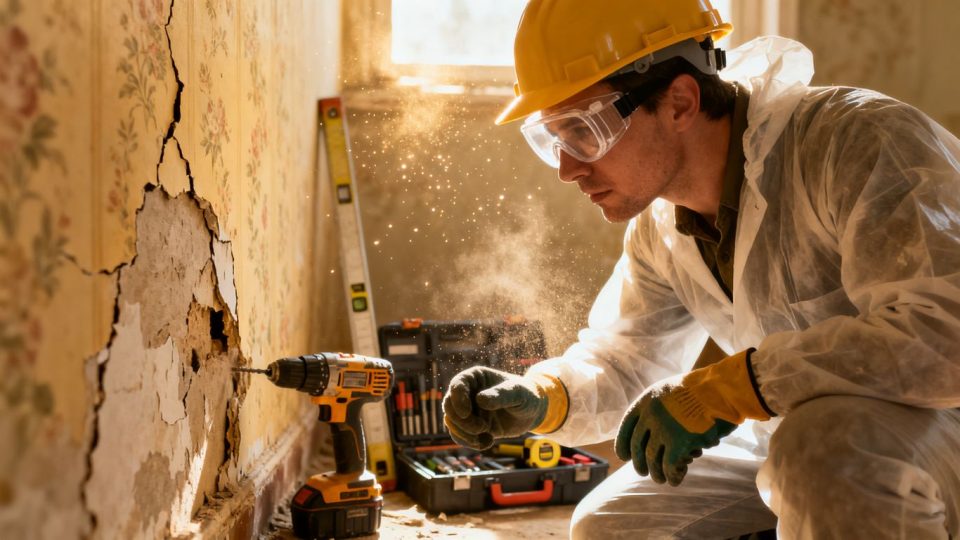
Standard power tools are highly effective at finishing surfaces, yet they produce the exact conditions necessary for airborne contamination. When drilling into drywall or sanding textured ceilings, workers create microscopic plumes of dust that remain suspended in the air for extended periods. This specific asbestos exposure renovation risk is the primary reason why professional oversight is strongly recommended during any physical modification to historic interiors.
Why friable versus non-friable materials change the risk profile
Materials are classified by their ability to release fibers, which is critical for understanding the immediate danger level present in an apartment. Friable materials, such as frayed insulation or old acoustic spray-on coatings, can be crumbled by light pressure and immediately release dust. Non-friable materials are bound within a matrix like vinyl or cement, generally remaining safe until they are mechanically pulverized or demolished. During a home upgrade, homeowners should recognize these common materials that frequently hide dangerous fibers:
- Attic and pipe insulation wraps
- Textured popcorn ceiling finishes
- Vinyl flooring mastic and adhesive
- Old drywall joint compounds
- Exterior cementitious siding boards
Once a surface is opened or damaged, the potential for widespread fiber transmission increases significantly, necessitating containment before moving forward with structural changes.
Common areas where asbestos remains hidden
Locating asbestos within a residential unit is complicated by the fact that it was frequently used as a hidden additive rather than a primary building element. Materials were layered under modern finishes, making them virtually invisible until a demolition wall is opened. These hidden components often require professional inspection to confirm their chemical composition before any heavy work begins.
Insulation and texture in ceiling materials
Popcorn ceilings, which gained popularity for their acoustic dampening and aesthetic appeal, are infamous for containing fibrous additives. These textures are inherently crumbly, and age often worsens their structural integrity, making them prone to spontaneous shedding. Owners of older properties should avoid scraping these ceilings as part of a DIY project, as this visual identification attempt is never a substitute for laboratory confirmation.
Flooring adhesives and vinyl tile components
Vinyl sheet flooring and individual tiles often relied on asbestos-laden mastic for their durable adhesion to subfloors. During a renovation, removing original flooring often requires scraping away these historic adhesives, which can release substantial amounts of dust if performed incorrectly. It is common to find these tiles hidden under newer layers of carpet or high-quality hardwood floors installed by previous owners.
Drywall joint compounds and wall plasters
Joint compound used to smooth interior walls often contained binding agents made from asbestos to improve application and durability. When residents decide to hang new light fixtures or remodel an entire wall, the process of sanding down these joints initiates the release of latent materials. Because these compounds are ubiquitous in walls, they present one of the most frequent points of contact for homeowners during light-duty renovation tasks.
Roofing and exterior siding materials
Exterior components like shingles and siding panels were frequently manufactured with cement-reinforced fibers to improve weather resistance. While these materials are generally non-friable under normal weather conditions, they can shatter during removal or repair. Improperly handling external siding panels risk spreading microscopic dust into the surrounding air and ventilation systems, impacting not just the renovation site but the entire building.
The health risks of airborne asbestos exposure
Breathing in concentrated dust is the most direct path to developing long-term health complications. The danger is not immediate in the sense of acute toxicity, but rather represents a persistent physiological insult that can accumulate over decades. Understanding this mechanism is vital for maintaining a healthy and safe residential environment during any planned improvements.
How microscopic fibers are inhaled into the lungs
When materials are broken, the fibrous minerals become airborne and are easily drawn into the respiratory tract. These microscopic shards are often needle-like; they bypass the upper airway defenses and become permanently embedded in the deepest regions of the lung tissue. Once lodged, they cannot be easily cleared by the body, triggering chronic irritation that impacts respiratory performance over time.
Long-term respiratory conditions and tissue scarring
Internal inflammation caused by these embedded needles can lead to debilitating diseases such as asbestosis. This condition involves the extensive scarring of functional lung tissue, which reduces the efficiency of oxygen exchange and limits physical endurance. The onset of these issues is often delayed, emerging years after the initial asbestos exposure renovation occurred, making the correlation between a past hobbyist project and current health struggles difficult to establish without expert medical input.
The link between fiber inhalation and mesothelioma
Chronic cellular damage caused by fiber ingestion is a known primary driver for malignant tumors, specifically within the thin linings of the chest and abdomen. Mesothelioma is a highly aggressive condition that develops when these trapped fibers alter host cell DNA and prevent normal repair mechanisms. Because there is currently no established threshold of safety for exposure, minimizing all contact during renovation is a critical public health priority.
Essential steps to identify asbestos before starting work
Proactive identification is the only reliable way to manage risk, yet many homeowners assume that age alone determines the presence of hazards. While construction date remains a strong indicator, it is never definitive. Prior to any demolition, stakeholders must perform a systematic assessment to avoid accidental contamination of their living space.
Assessing the construction date of your property
Buildings constructed prior to the 1990s have the highest probability of containing legacy materials in their structural framework. If records indicate that an apartment was completed during this era, owners should treat any renovation as a high-risk activity until proven otherwise. Relying on property age allows you to categorize the likelihood of hazard before scheduling an inspection, ensuring that resources are prioritized correctly.
The necessity of professional lab testing
Visual estimation is notoriously unreliable because many asbestos-free materials mimic the exact appearance of hazardous components. Only an authorized laboratory, using polarized light microscopy or other analytical techniques, can confirm whether a material requires special handling. Professional testing kits provide the rigorous, defensible data required to make sound decisions about the scope of any modification.
Why visual inspection is often unreliable
Attempts to identify hazards by texture or color are often misleading, leading to either unnecessary anxiety or dangerous overconfidence. A material that looks pristine and safe can still contain significant concentrations of fibers. Relying strictly on tactile or visual cues ignores the hidden nature of binder additives, which is why scientific analysis is needed to maintain a safe working environment.
Proper protocols for managing asbestos-containing materials
If the presence of hazardous materials is confirmed, the project must immediately shift from a demolition focus to a risk-mitigation strategy. There are multiple ways to manage resources safely, including isolating the hazard or hiring specialists who adhere to strict safety standards. Ensuring compliance serves both the safety of your family and the long-term viability of the real estate investment.
Deciding between encapsulation and total removal
When a material is stable, the most effective management strategy is often encapsulation rather than aggressive removal. This involves sealing the surface with specialized compounds that prevent fibers from ever becoming airborne, effectively locking away the danger. If a material is too damaged to be sealed, full professional abatement is required to ensure that the site is completely cleansed of all hazardous particles.
Hiring certified abatement contractors for safely
Abatement is a highly regulated discipline that requires deep expertise in hazardous material handling and specialized containment systems. Certified professionals utilize negative-pressure air filtration and high-efficiency particulate air (HEPA) systems to ensure that dust does not travel to adjacent rooms. Following a verified protocol ensures that the work satisfies all local environmental regulations and keeps the occupants safe for the duration of the project.
Necessary safety standards for residential project sites
Adherence to rigorous safety standards prevents the contamination of the entire building footprint during a remodel. Sites undergoing intervention must remain isolated from family activities, incorporating strict housekeeping, air sampling, and personal protective equipment protocols for anyone within the controlled zone. Ultimately, the priority is to maintain air quality throughout the process, ensuring the home remains a healthy environment for its long-term residents.
